
Bennington
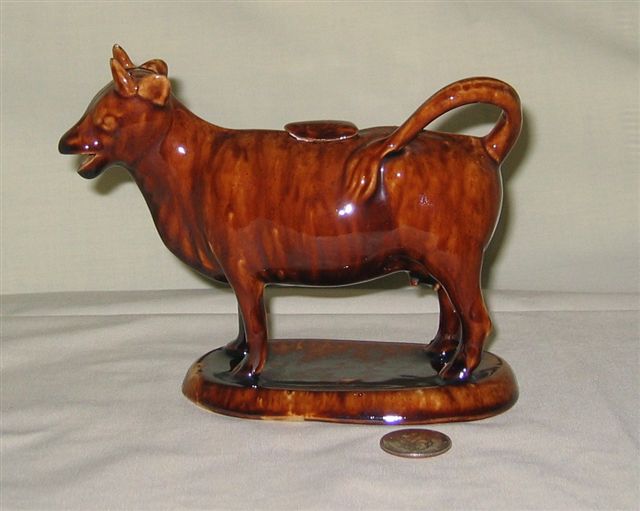
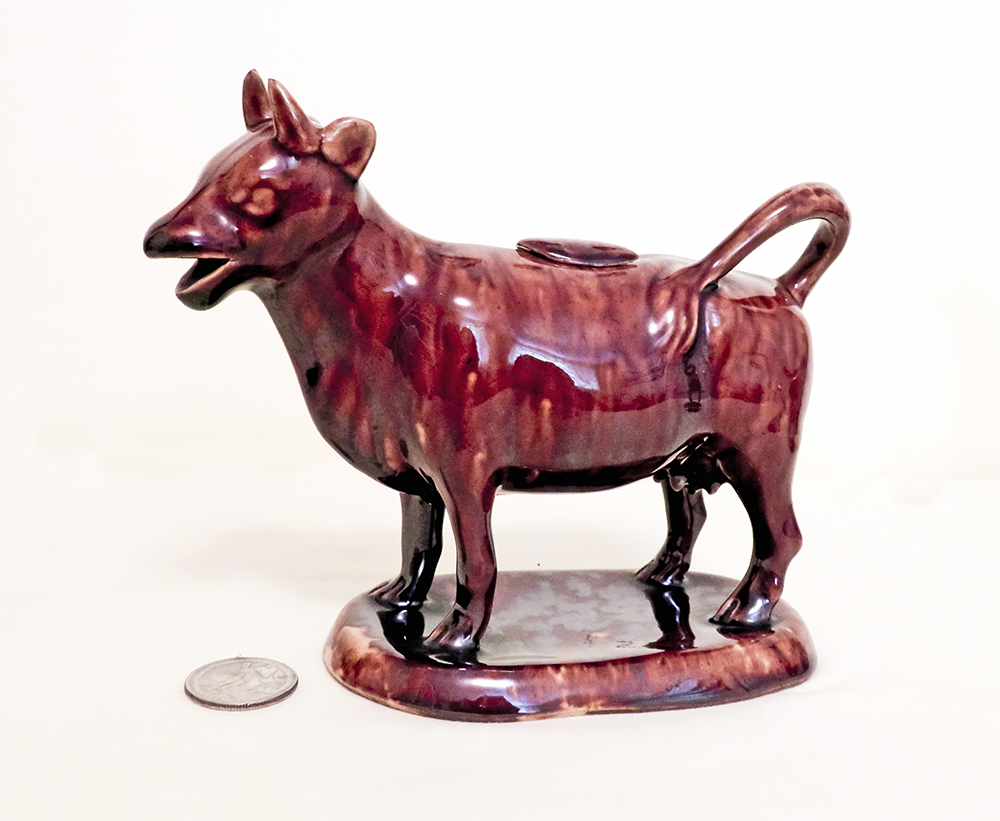
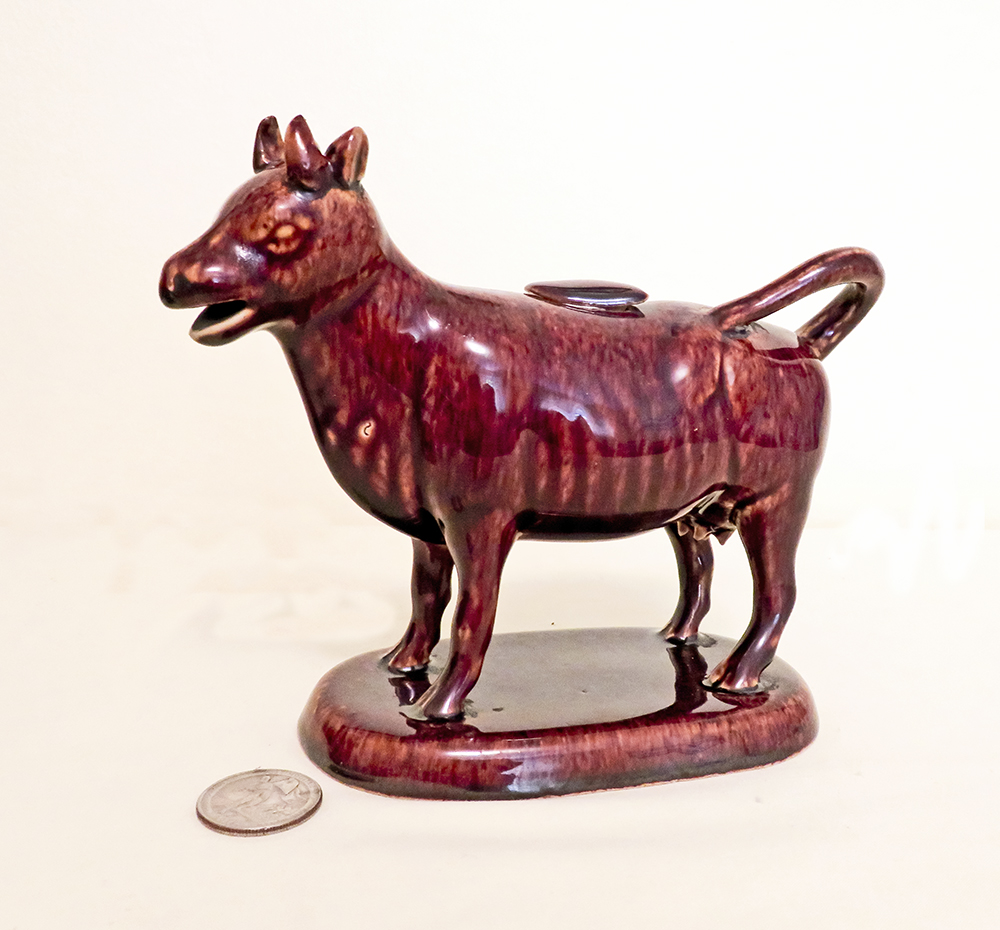
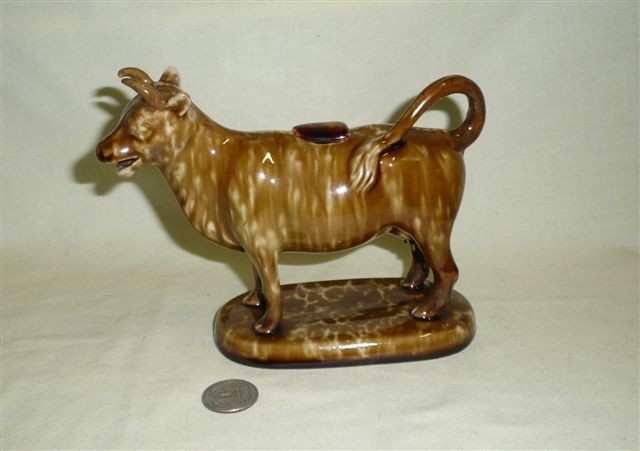
This lidded creamer on an oval base is a fine example of American Rockingham ware, which is the term for cream or yellow ware that has been dipped or splattered with brown glaze before firing. Rockingham ware was widely produced in the eastern US in the mid-1800s. This page of the web site should therefore perhaps be termed “American Rockingham” for the coloring and glaze, but most of these creamers of this style and glaze are associated primarily with Bennington, Vermont. Vermont is famous for its cows (more of them than people, they used to brag; friendlier, too, some say.), and I’m a Yankee by birth, so I’ve chosen to use that term. I have put these creamers in a theme of their own because, whether they were actually made in Bennington or not (and I strongly suspect most were), they are assuredly early (19c) American pottery, and as far as I know, the earliest cow creamers made on the US side of the Atlantic.
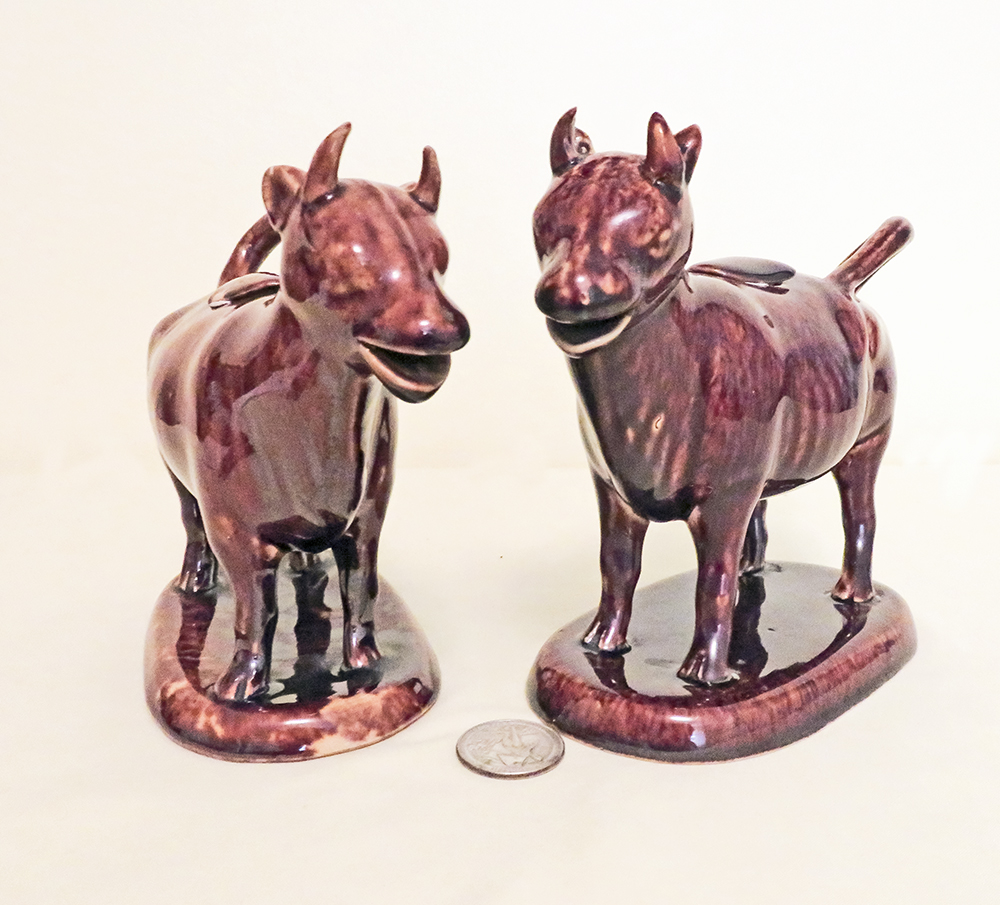
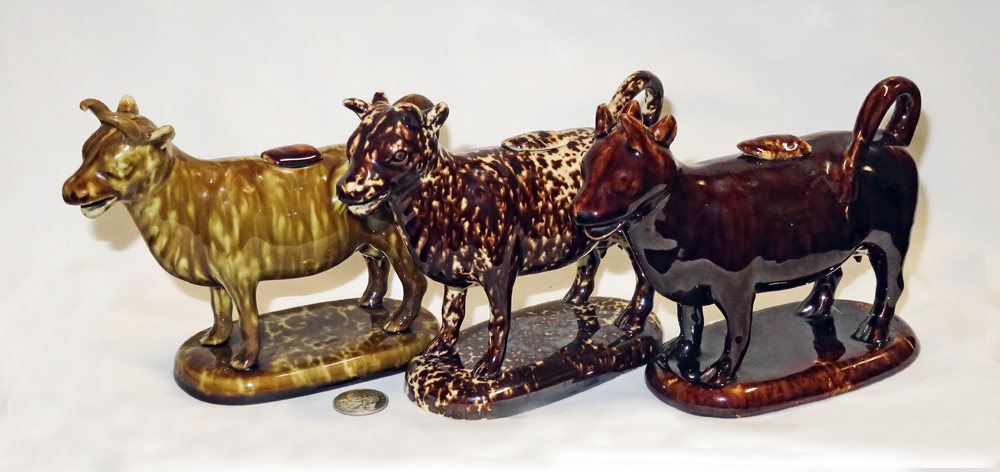
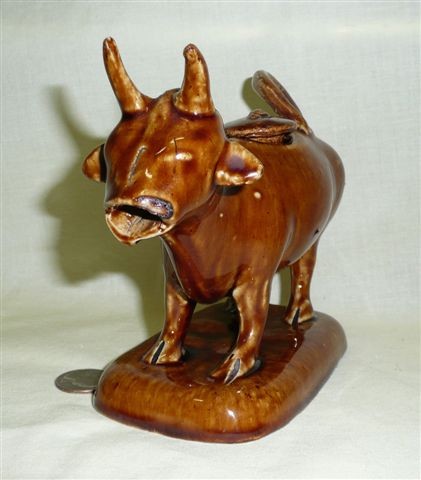
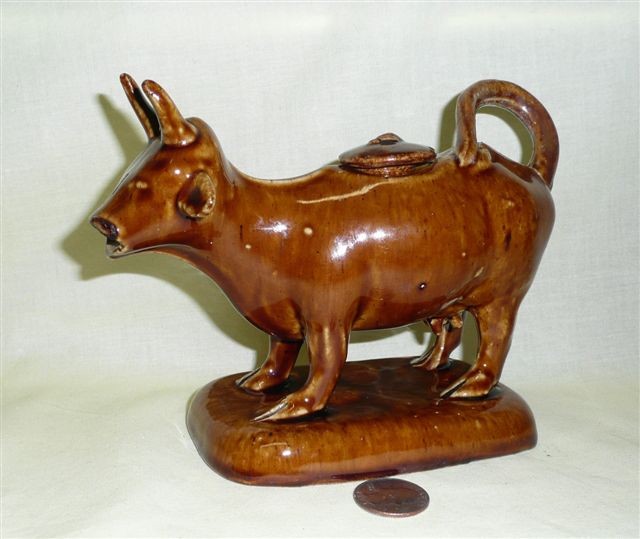
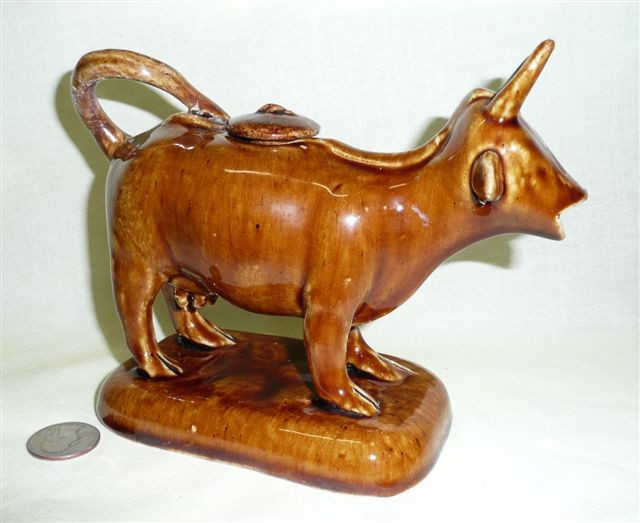
Here are some examples from my collection, showing the differences in the coloring that was noted by the National Academy of Art*. The shapes and thus the molds seem quite similar, except for one of the creamers in the third picture, but no two pieces are identical. Per usual, if some expert can help me more precisely attribute these creamers, I’d be most appreciative.
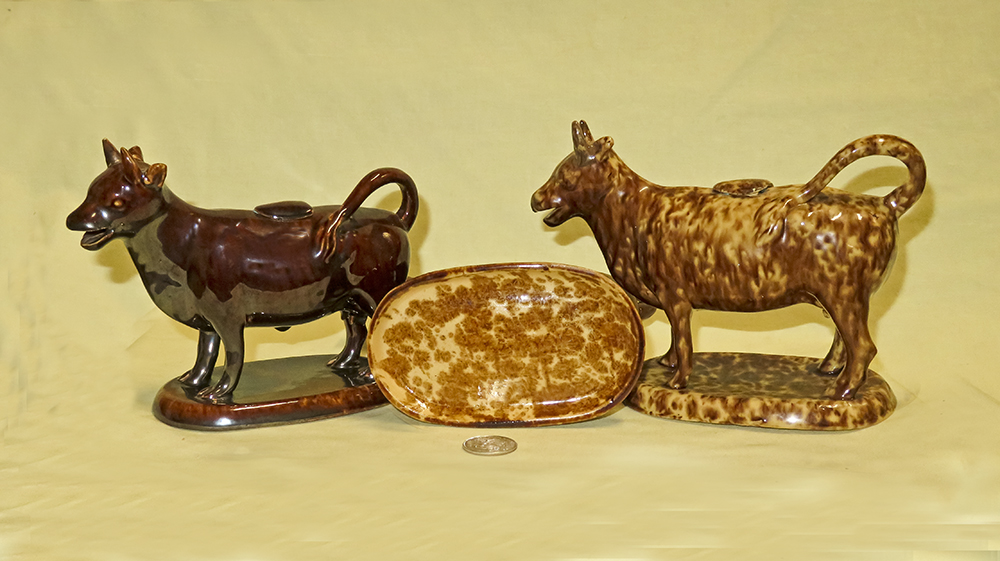
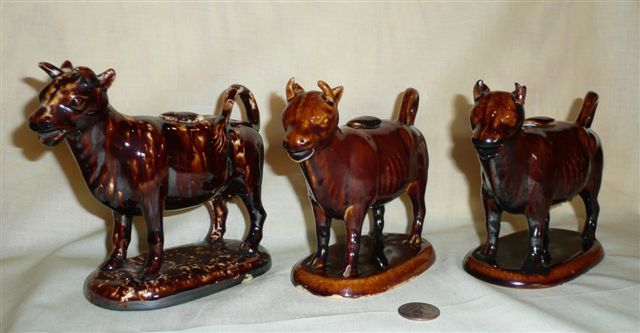
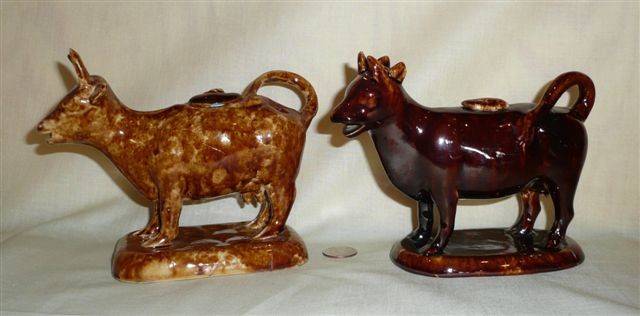
The Bennington Museum’s web site notes that “pottery has been made in Bennington since 1785 when Captain John Norton began to produce utilitarian earthenware and stoneware. The Norton pottery grew throughout the 19th century and gained fame for its brilliantly decorated stoneware featuring flowers, birds, and animals. Regular pottery production ceased in 1894, though the company operated as a wholesaler until 1911. The United States Pottery company (1847 - 1858) produced ornamental objects including yellowware with Rockingham and flint enamel glazes, agate and granite wares, porcelain and parian.” These two potteries are credited with a prodigious, if relatively short-lived, output of American Rockingham.
*From the National Gallery of Art's website:
“The nineteenth century was a time of experimentation not only with novel forms, but also with a variety of glazes. Both the Norton and Fenton potteries of Bennington, Vermont, became famous for their "Rockingham" ware. Typically, Rockingham pottery is covered with a mottled brown glaze, made to imitate the tortoiseshell appearance of wares produced at the Marquis of Rockingham's pottery in England. The brown color is part of the glaze itself, which was spattered on the fired clay body. Variations in color were achieved by applying the glaze more heavily in some spots, thinning it in others, and by allowing it to streak. The glazing process permitted random and accidental effects; consequently, no two pieces of Rockingham ware were alike. Although Rockingham ware is associated primarily with Bennington, other American potteries also produced it. The Bennington pieces, at least until 1856, were exceptionally fine in finish because a double glaze technique was used. A glossy underglaze was applied to the clay piece. After an initial firing, the brown Rockingham glaze was spattered on and the piece was fired again. The result was a final glaze effect of extraordinary depth and brilliance.”
|
|
|
|
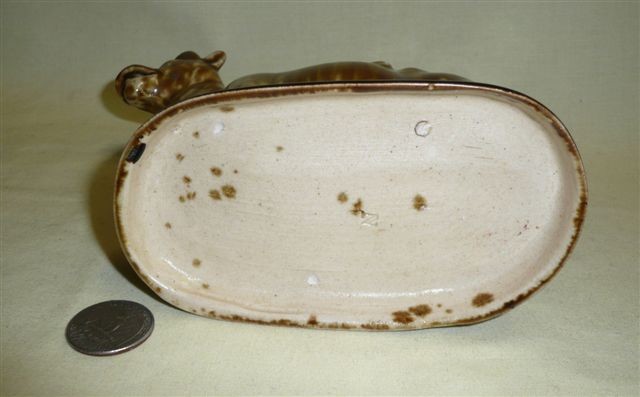 |
I purchased this example (shown also just above with cousins) on eBay, and here is how it was described by the knowledgeable seller: “1845 VERY Rare SIGNED NORTON COW CREAMER BENNINGTON GREAT COLOR. This is one of the earliest Bennington Cow Creamers, dating to the 1845-1847 time period. This creamer has a deeply impressed N on the bottom. Research indicates it was made before Fenton's 1847 mark and the "Bennington" marks of 1849. Bennington has become a generic term for mottled brown pottery, although it is not a type of pottery, but rather a town in Vermont. There were 2 important potteries located in Bennington, Vermont. The Norton Company was established in the 1790's. They were in partnership with Fenton during a short period of time (1845-47), and that was when this type of Rockingham glaze was used. If this creamer was made after 1847, it would have had either no mark or a different mark. Fenton opened his own pottery in 1847 and closed in 1858. Only 1 in 5 items were marked and there were 8 different marks used. The two most common were an "F" or the 1849 mark which also has the word "Bennington". It has its fill cap and there are no chips or flakes. It has wonderful color and form, with a really nice mold strike. The crescent eyes are well defined as well as the ribs going down from the face to the legs. It also has a well defined hairy end on its tail. One of the horns might possibly have an old, professional repair at it's base, although we are not entirely sure. There is a line about ¼" up the tail from the body. This is certainly a nice Norton cow creamer, with lots of history!” Further, he noted that a 1992 Schroeder’s guide for Bennington states that “ The Norton Co., founded in 1793, produced mainly redware and salt=glazed stoneware: only during a brief partnership with Fenton (1845-47) was any Rockingham attempted.” |
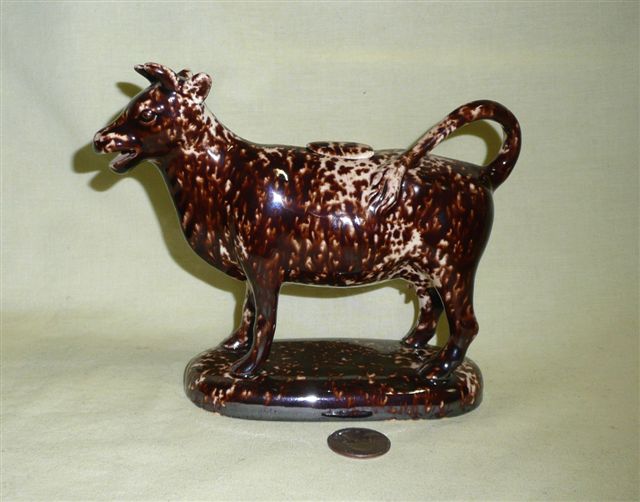 |
Here is what I consider to be a particularly fine example of Rockingham glaze on the most common form of Bennington cow creamer. |
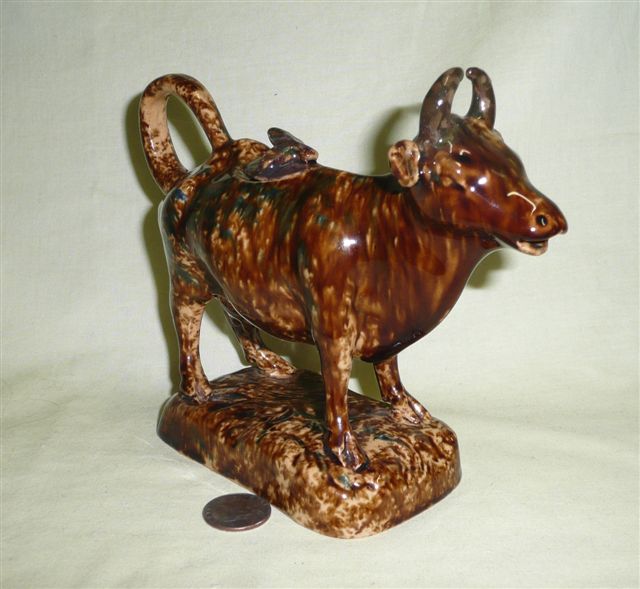 |
This is a beautiful example of yet another form, certainly with Rockingham glaze, and most likely
Bennington. It came to me via sellers who got it at an auction in SE Pennsylvania, where it was said
to date from the early to mid 1800s. In contrast to the others here, it bears a stylized fly on the
lid. |
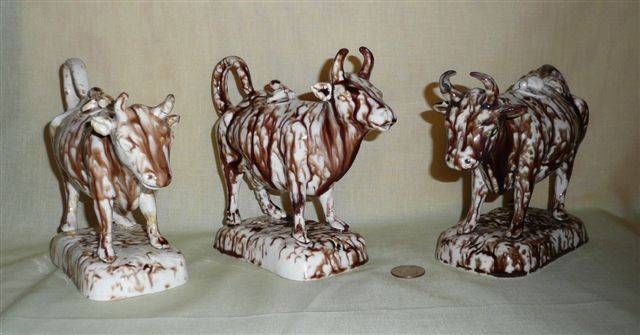 |
These three are similar in shape and style to the one above, but have a very different glaze, which one seller claimed indicates that they’re Pearlware from around the 1840s. For a while I showed these on my Staffordshire page, but based on their resemblance to the one above, including the stylized fly - and the fact that the sellers were all from the eastern US or Canada - I now think that they’re more likely 19c American. I sure would appreciate advice from an expert on early American pottery. |
|
|
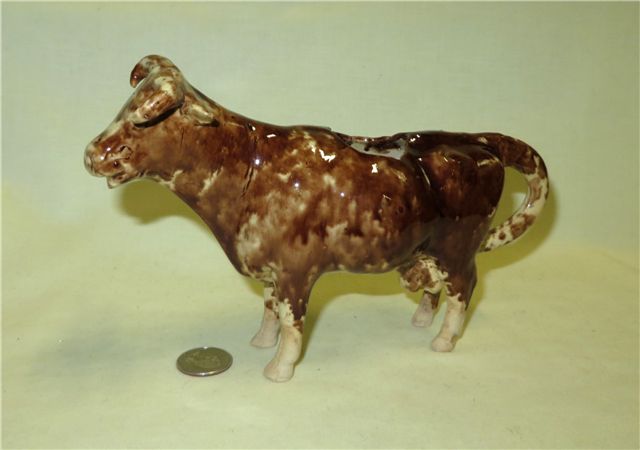 |
This is my only Rockingham Glaze creamer without a base. It’s also unusual in that the lower legs and hooves are unglazed, and its form is distinctly different than any of the others above. I believe it to be American – but the only information I have on it is that it belonged to the seller’s grandmother, who died in 1956. |